
Preventing Ice Dams: A Comprehensive Guide for La Crosse Homeowners
La Crosse winters average 46.3 inches of snow each year, and with that snow comes the risk of ice dams. These formations develop quietly along roof edges and can cause serious damage to your roofing system, gutters and interior spaces if left unmanaged.
Fortunately, ice dams are preventable when you understand how they form. Once you know what creates ice buildup, you can take targeted steps before winter arrives.
What Causes Ice Dams on La Crosse Roofs?
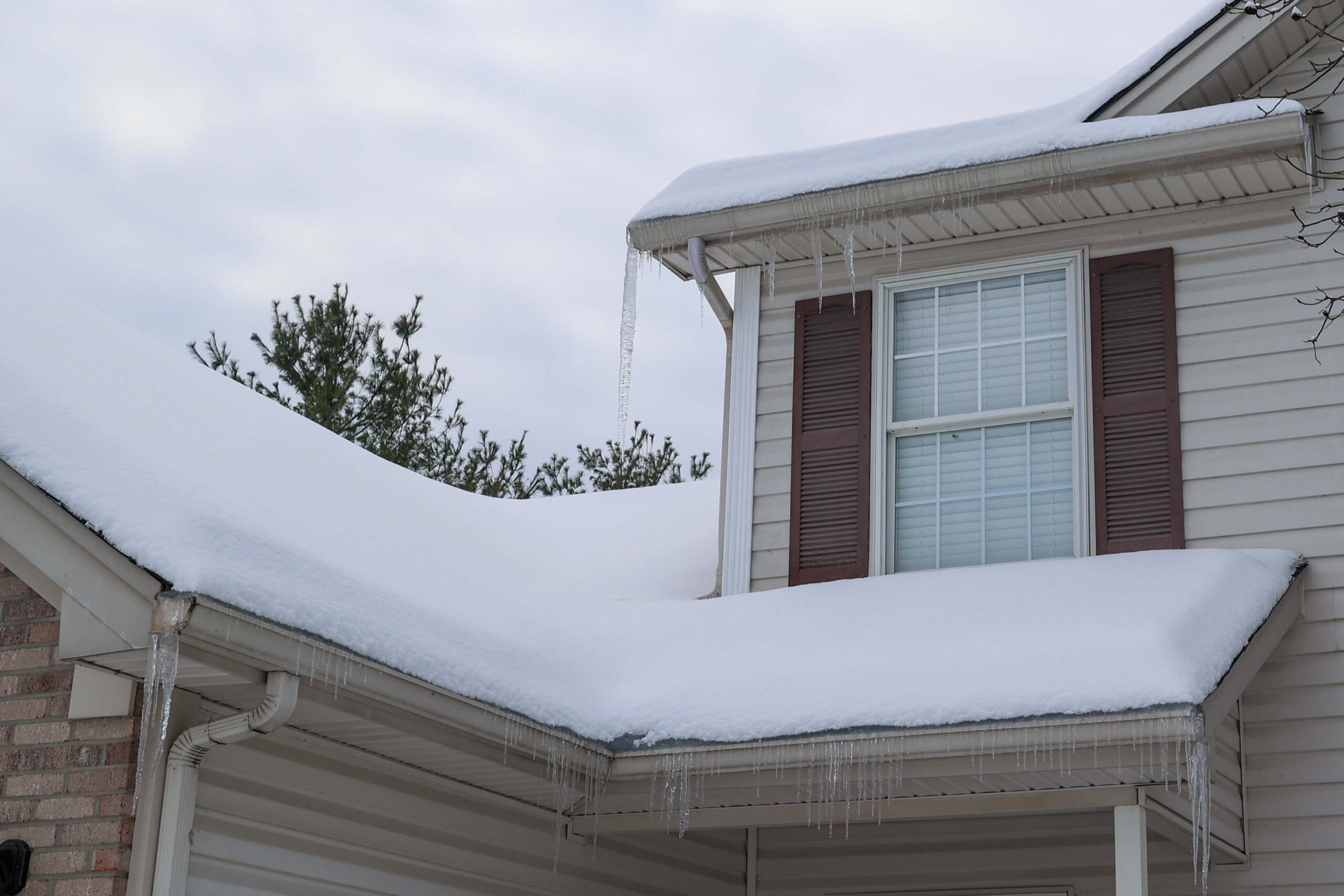
Ice dams are ridges of ice that form along the edge of your roof and block water from draining properly. They develop through a three-stage thermal process that happens when indoor heat interacts with snow on your roof. Here’s how the cycle unfolds:
- Warm air moves upward: Inadequate attic insulation or air sealing allows heat from your living space to warm the roof deck above, raising its temperature above freezing and melting the snow sitting on top.
- Meltwater travels downslope: The melted snow flows down the roof as water. When it reaches the eave — the section of roof that extends beyond your exterior walls — it encounters a surface that stays at or below freezing because there’s no heated space underneath.
- Ice buildup at the cold edge: Water hitting the cold eave refreezes. Over time, ice accumulates into a dam that blocks drainage and forces water to back up under your shingles and into your home.
The Damage Ice Dams Can Cause to Your Home
Ice dam damage often starts in hidden areas and compounds quickly before you realize what’s happening. What begins as a small ice ridge can lead to significant structural and financial consequences.
Roof Leaks and Shingle Damage
When ice dams trap water on your roof, that water can work under shingles, seep through underlayment and reach the roof deck. Once inside, it can damage wood framing, create weak spots and make future roof leaks more likely.
Heavy ice can also strain the roof edge, while repeated freezing and thawing can lift, crack or loosen shingles. Over time, those issues reduce your roof’s ability to shed water and increase the risk of more serious ice dam damage. If you do notice lifted or damaged shingles after winter, professional roof repair can restore protection before the next storm season arrives.
Gutter Damage
Ice expansion in and around gutters creates enormous pressure. As water refreezes inside gutter channels, it expands and pushes outward with enough force to pull gutters away from the fascia. The weight of accumulated ice compounds the problem, bending or cracking gutter sections and loosening mounting hardware.
Once gutters are compromised, they can’t handle drainage during thaw events. Water spills over the sides instead of flowing through downspouts, accelerating ice dam formation and creating new leak points along the roofline. Proper maintenance and protection strategies can significantly reduce this risk.
Interior Damage
Water infiltration from ice dams can travel through ceiling drywall, wall insulation and structural framing. Because the damage often starts in attics or wall cavities, it may go undetected until you notice a ceiling stain or soft drywall.
Moisture trapped in enclosed spaces can also create conditions for mildew and mold growth. Mold can pose real health risks, including respiratory issues, allergic reactions and aggravated asthma symptoms.
Between repairing water-damaged ceilings and walls, remediating mold and replacing insulation, homeowners can face repair costs reaching thousands of dollars. Preventing ice dams in the first place helps protect your health and your budget.
How to Prevent Ice Dams
The best defense against ice dams combines structural fixes with maintenance. These five steps give you a comprehensive approach to roof protection in winter.

1. Seal Attic Air Leaks
Warm air escaping from your living space into the attic is a primary driver of ice dam formation. Leaks around plumbing stacks, electrical runs, recessed lights and chimney chases can bypass insulation and warm the roof deck enough to start the melt-refreeze cycle.
During an attic inspection, look for warm attic temperatures or disturbed insulation around ceiling fixtures, bathroom fans and vents. Sealing those gaps with spray foam or caulk stops heat loss at the source.
2. Upgrade Your Attic Insulation
Heat naturally rises, so effective attic insulation helps keep warmth inside your home and away from the roof deck. Wisconsin building standards recommend a minimum of R-49 for attic insulation assemblies, which helps the roof deck stay cold enough for snow to remain frozen.
3. Make Sure Your Attic Is Properly Ventilated
Insulation and ventilation work as a team to prevent ice dams. Balanced soffit-to-ridge ventilation keeps attic air temperature close to the outdoor ambient temperature, which helps the roof deck stay uniformly cold. Before winter arrives, inspect your attic for warning signs like light coming through the roof deck or warm attic temperatures. Our winter roof inspection checklist can help you identify what to look for.
Natural ventilation through soffit and ridge vents is preferred over powered attic fans, which can create negative pressure that pulls warm air up from your living space. Ace Of All Trades designs custom ventilation systems with the right balance of intake and exhaust to aid in ice dam prevention.
4. Keep Gutters and Roof Edges Clear
When gutters fill with leaves, twigs and debris, water can sit at the eave, refreeze and accelerate ice buildup. Before winter, clean out all gutter debris and check that downspouts flow freely. After thaw events, watch for backed-up water or ice blocking the downspout opening.
Gutter guards reduce debris buildup and make maintenance easier. For homes with chronic ice dam problems, heated gutter systems provide continuous protection by preventing ice from forming in the first place.
5. Remove Snow After Heavy Storms
Less snow on the roof means less raw material for ice dam formation. That’s where a roof rake comes in handy. A roof rake is a long-handled tool that lets you safely pull snow off your roof while standing on the ground.
Remember, safety comes first. Never climb onto an icy or snow-covered roof. For steep pitches, large roofs or heavy accumulation events, professional snow removal is the smarter call. If your roof has sustained storm damage or weather-related issues, a professional inspection can identify problems before they worsen.
When to Call a Professional for Ice Dam Help
Some warning signs mean it’s time to bring in a roofing professional:
- Icicles larger than normal or recurring in the same spot year after year
- Water staining appearing on ceilings or walls
- Sagging or pulling gutters
- Active ice buildup at the eave despite regular maintenance
- An older home that has never had attic insulation or ventilation professionally assessed
Ace Of All Trades backs each project with an owner-led model, freeze-thaw-rated materials and a 100% satisfaction guarantee. We recommend an annual roof inspection to assess attic conditions, ventilation and roof health before winter arrives.
Protect Your Home With Ace Of All Trades
Ice dams don’t have to become a recurring winter problem. Ace Of All Trades helps La Crosse homeowners with custom inspections, gutter installation, ventilation solutions and roof repairs.
As a locally owned and operated roofing expert, we bring a customer-first approach and superior craftsmanship to every project. We’re a GAF-certified and CertainTeed ShingleMaster contractor and install quality roofing products that are built to handle Wisconsin’s freeze-thaw conditions.
Call 608-650-5252 or reach out online to request an inspection or roofing service.